
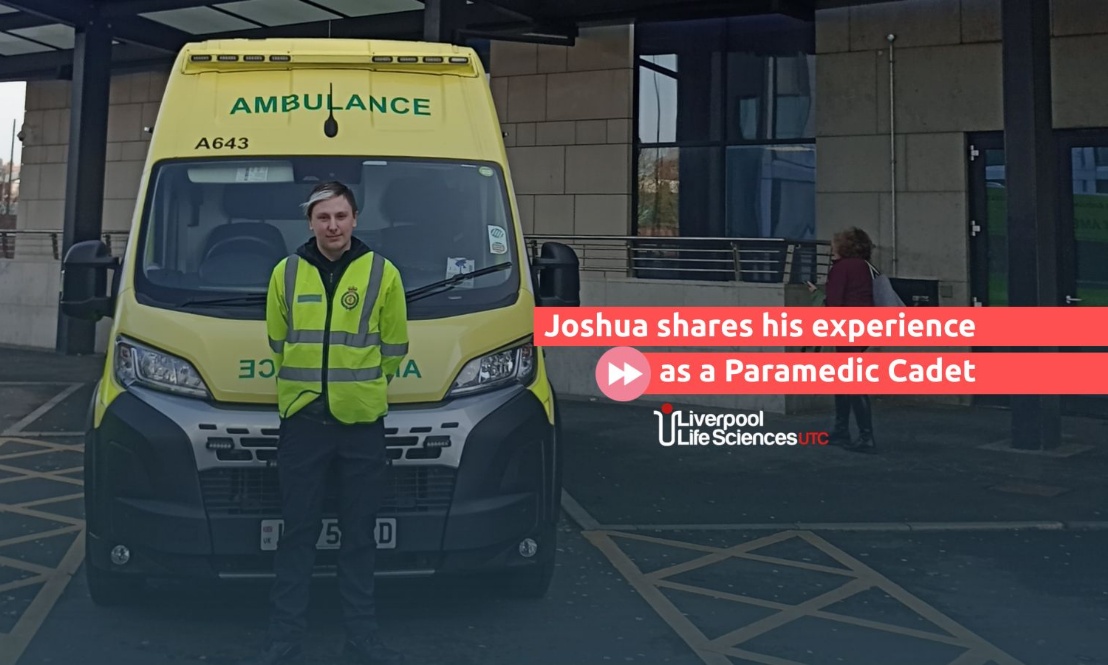
Do you want to do Paramedic Studies at University?
Well you can do Paramedic Cadets at this Sixth Form!
Hi, I'm Joshua, and for a while now I have wanted to become a Paramedic so I saw an opportunity, and grasped it as fast as I could.
Before I came to this Sixth Form, there was no Paramedic Cadet Programme in place for students who wanted to do something other than a Nursing Cadet Programme.
So being me, I asked around to try and find something where I could be in the work environment of paramedics, and that is when I spoke to my Learning Support Mentor, Ben Aston. He asked me one question, “What do you want to do later in life?”, and I gave him the simple answer, I want to be a Paramedic, but I can't find any sort of placement that revolves around Paramedics.
This is when he introduced me to Abbey, who works with the North West Ambulance Service (NWAS). After a bunch of emails back and forth, we managed to arrange a meeting with Sara Graham, in charge of health and social care courses in this school. And luckily for me, they came to the agreement that our health and social care students will be allocated 5 places!
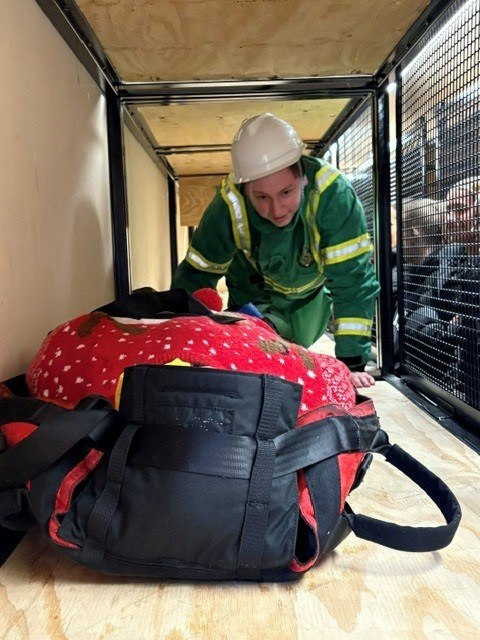
Patient Transport Service
For your first 5 weeks of placement of this Paramedic Cadet Programme, you will be assisting a Patient Transport Team (PTS). Within this experience, you will assist the professionals by gathering any of the patient’s belongings which they may need to help them with movement.
You may have to give the patient some support if needed, like assisting them to walk, allowing them to lean on you, and you may have to sit in the back of the ambulance and interact with the patient and calm them down if they are feeling stressed.
Even if you don't want to become a PT Paramedic, this is a great experience for everyone to start on the ambulances before they go on the Emergency Ambulances.
Here are some of my experiences during my 5 week placement on the Patient Transport Service...
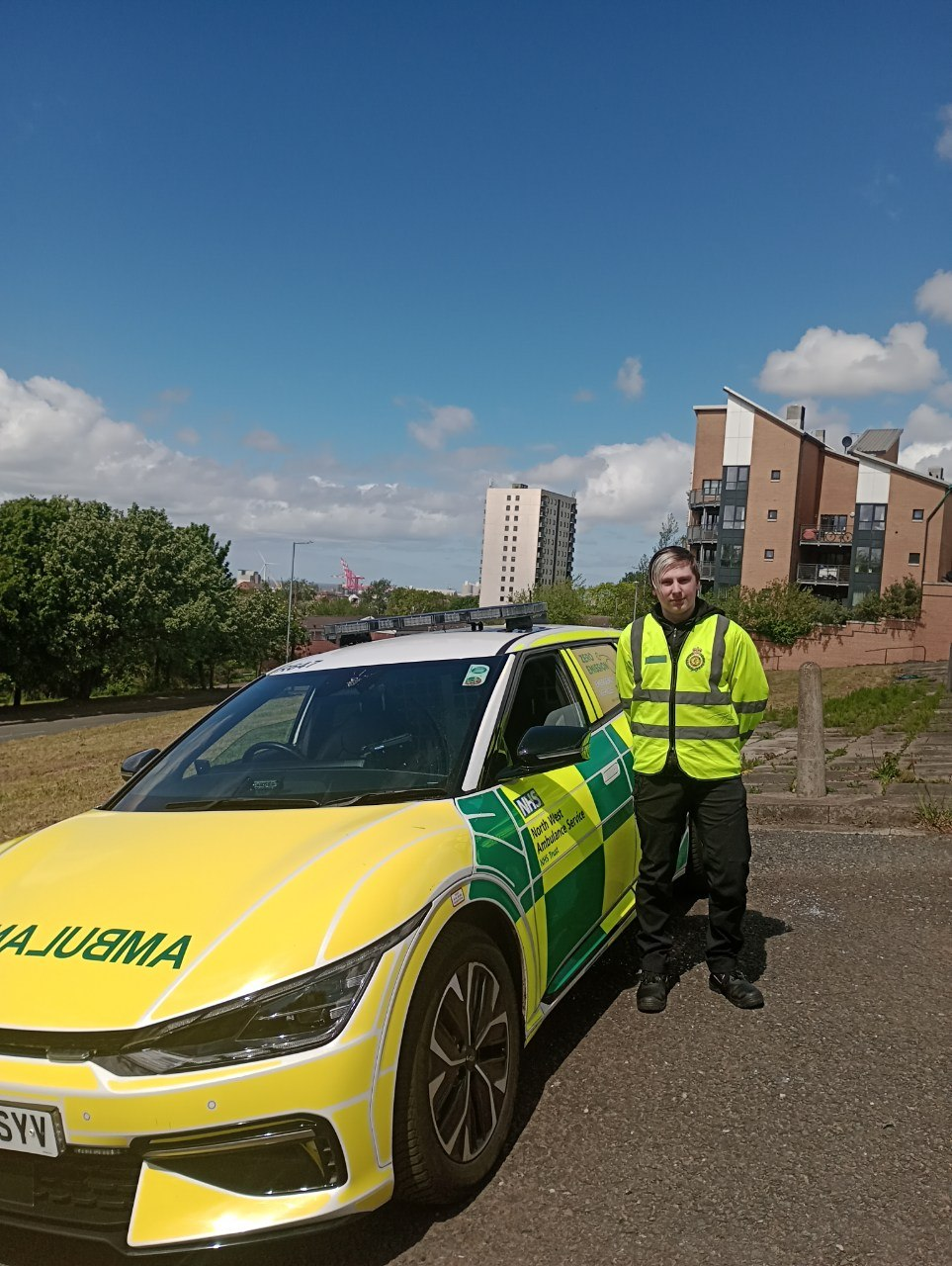
Week 1
During your first week of placement, it's probably not what you’re expecting because you go literally everywhere and you meet a variety of people. On my first placement, I went from Anfield - Speke - Aintree Hospital - Spira - Whiston - Otterspool - Royal Hospital - Broadgreen Hospital - Royal Hospital - Patients home. So that is just some of the many places you will go, if you are based in Liverpool, but you may also have to pick-up patients in Manchester etc.
Then, along with the many places, you meet many different people with many stories. For example, the first patient I met was an individual with Diabetes type 1 and he used to work for the NHS. He also said he dealt with a few gunshot wounds and he had to work on a psychiatric ward with mentally challenged individuals. Then the second individual I met was an individual who suffered from a lot of falls and she was explaining to me how her grandson became a paramedic. When her grandson was 14 years old, he was getting the bus home from school and a middle aged woman fell down the stairs whilst having a heart attack, her grandson didn’t stop to think and started performing CPR on the individual. Her grandson saved this woman’s life and was rewarded a medal of bravery.
Week 2
During week 2, for pretty much the whole day we were going back and forth from Broadgreen Hospital. When you're on this placement, you may get some comments which you don't like, but you've got to move on, for example, we had an individual during the day which we picked up with his wife and because I am an observer (so I can’t do much) they called me very lazy. This didn't really bother me at all but some individuals may say nastier things but you just have to not be bothered by it, otherwise you may be the one getting in trouble.
Our first patient of the day was an individual with a leg cage on and he was with his wife, they didn't really say much, probably because it was so early but they said some lovely comments about me and the crew. Funny enough, we picked them back up during the end of the day, our last patient, and they were a bit more chatty and told some stories about his previous job. So this individual used to be a postman and whilst doing this job he ran into a couple of dogs but one dog, he said, “one dog he will never forget!”. He was doing his daily routine and at one house there is a huge Dalmatian dog and he said this house has a huge glass door, when he was posting the mail he heard loud thuds getting closer to him and the next minute the whole glass door shattered. He said he has never run that fast in his life, the dalmatian was chasing him and he saw a van so he ran on top of it and this dog was screaming at him for a good 20 minutes. He was screaming at the owner to get the dog, turns out he was screaming at a woman who was knocked out by her own dog. She was taking her dog on a walk and the dog dragged her across the street, she burnt all her arm and face and as soon as the dog started running she smacked her face into the ground and was knocked out on impact. Eventually she woke up and got her dog but was rushed to hospital for possible brain bleed, our patient said he will never trust a dalmatian ever again and he quit being a postman after that day.
Week 3
During this placement we got a lot of compliments from many patients. During the afternoon, we picked up a patient with multiple sclerosis and she was very kind. We were talking about driving at the time saying we don't understand how some people manage to pass their driving test when they don’t know how to indicate or read the traffic lights. And then I was asked if I'm doing my driving lessons, I said no, and then she gave me a few tips which were very helpful and then when we dropped her off at her house she wished me the best of luck. Honestly that was pretty much the whole day, constant compliments and best of luck but I wasn’t complaining.
But at the end of the day, we had an individual who could almost barely walk and we were waiting for a crew to help assist with lifting the patient (in a wheelchair) up some stairs into his house. We were waiting for over 15 minutes for the other crew and it was pretty cold so I turned to the paramedics and asked if I could try and help lift them. They said I don’t see why not because we are teaching you, so they gave me a quick little lesson on how to lift patients safely and we gave it a go. And we did it well, and the patient was very thankful. Whilst doing these placements you will learn many things every day in many different ways but you will always learn something new.
I found that after doing this experience I was able to speak to each patient much easier each week. I genuinely believe that my communication skills have improved so much. I spoke to almost every patient and a lot of their family members. I really do believe that this is a great opportunity for young individuals who aspire to become a paramedic in the future.
There is also a chance that with doing this placement the stations may provide you with some opportunities, and this is great to show you universities because they love young adults with great experiences.
I am very happy that I was able to arrange this with NWAS as I believe it shows my confidence and commitment in becoming a paramedic.
"Joshua’s utter commitment, drive and passion for paramedicine was immediately apparent when I started teaching and learning with him. He would make links to his future career and professional standards throughout our work on anatomy and physiology and think creatively in his written coursework. When visiting speakers came in, he was riveted. Seeing Josh’s tenacious journey is heartwarming and inspirational; he deserves to go really far."
- Liz Voges, teacher of Health and Social Care
If you'd like to follow in Joshua's footsteps, apply to our Sixth Form below.